
Trends in Augmented and Virtual Reality in Entertainment and Education
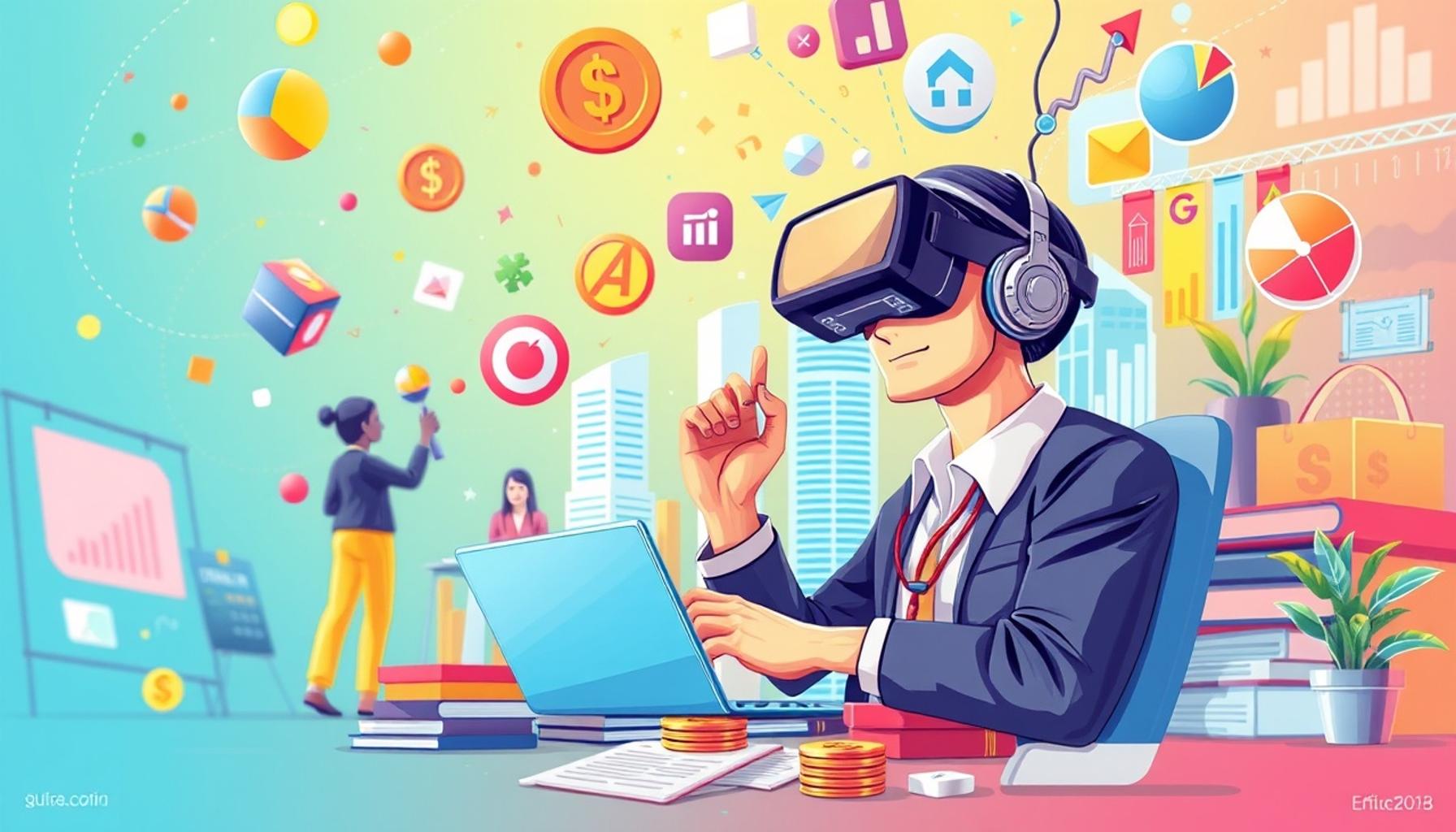
Engaging Experiences through AR and VR
Augmented Reality (AR) and Virtual Reality (VR) technologies are reshaping the ways we interact with entertainment and education, providing immersive experiences that captivate and engage users in unprecedented ways. By integrating digital content with our physical environment or creating entirely new worlds, these technologies are opening doors to innovative possibilities, impacting our everyday lives significantly.
Entertainment Transformations
In the realm of entertainment, AR and VR have pioneered a wave of interactive experiences. For instance, consider interactive gaming: titles like “Beat Saber” and “Half-Life: Alyx” pull players into rich, interactive worlds where they can physically move, engage, and interact with their surroundings, creating a sense of presence that traditional gaming cannot match. Gamers no longer just play; they experience the game as if they are truly part of it.
Virtual concerts and events have also gained immense popularity. Platforms such as Fortnite have famously hosted virtual concerts featuring artists like Travis Scott, attracting millions to enjoy live music from the comfort of their homes. As technology continues to advance, fans can anticipate even more immersive experiences, such as choosing their vantage point or interactive elements during the performance.
Moreover, 360-degree movies are pushing the boundaries of storytelling. Filmmakers are now exploring this medium, making the audience part of the narrative. For example, “The Invisible Man” in VR allows viewers to experience the film’s tension and atmosphere directly, as they can look around and immerse themselves fully in scenes, feeling the suspense from every angle.
The Evolution of Education
On the educational front, the integration of AR and VR presents remarkable advantages that enhance the learning experience. Through immersive learning, students can virtually visit historical landmarks or explore complex biological processes without leaving the classroom. A field trip that once required numerous logistical considerations can now be undertaken with a simple VR headset, allowing learners to experience the wonders of the past or the intricacies of the body right in their schools.
Enhanced engagement is another key benefit. Traditional textbooks often fail to capture the imagination of students, but when augmented with 3D models or virtual simulations, lessons come alive. For instance, using AR applications, students can manipulate objects in a chemistry experiment visually, observing chemical reactions in real-time, which is far more effective than reading about them in a textbook.
Finally, remote learning opportunities offered through these technologies break geographical constraints. With AR and VR, students from rural areas can access immersive educational tools, opening up a wealth of resources that enhance their learning. Imagine a student in a small town participating in a virtual science laboratory, collaborating with peers from across the globe, all thanks to the accessibility of AR and VR technologies.
As AR and VR continue to evolve, their integration into our daily lives will redefine how we learn and play. This shift is not merely a trend; it represents a momentous leap towards a future rich with interactive engagement, setting the stage for a world where opportunities are boundless.
Unleashing Creative Potential through AV Technologies
The revolution brought forth by Augmented Reality (AR) and Virtual Reality (VR) in both entertainment and education is not only about enhancing experiences but also about unleashing creative potential on multiple levels. As these technologies continue to develop, their applications have redefined traditional methods, leading to exciting new opportunities that engage users more deeply than ever before.
Immersive Engagements in Entertainment
In the entertainment sector, the allure of AR and VR is significant, creating immersive environments that captivate audiences. One compelling example can be seen in theater and live performances. Modern productions are beginning to integrate VR elements, taking storytelling to a groundbreaking level. Productions like “The Lion King” have experimented with virtual elements that enhance stagecraft, making audiences feel like they are a part of the performance.
Furthermore, escape rooms have gained traction through virtual settings, offering groups a chance to solve puzzles and unravel narratives from the comfort of their living rooms. Many businesses have capitalized on this trend, creating intricate storylines and challenges that make use of VR tech, thereby elevating the social experience and enabling remote participation.
- Interactive Tours: Museums and art galleries, such as The Louvre in Paris, are leveraging AR and VR to provide interactive tours that offer detailed views and historical context, enhancing educational value and visitors’ engagement.
- Fan Engagement: Sports teams are adopting VR experiences for fans, allowing them to virtually sit courtside or on the sideline, enhancing their connection to the game.
- Social Platforms: Virtual reality social spaces like VRChat and AltspaceVR have transformed the way people interact, enabling users to attend gatherings or meet new friends in a virtual environment.
Transformative Learning Experiences
The integration of AR and VR within education signifies a transformative phase in how knowledge is transferred and understood. By using these technologies, educators can create hands-on learning experiences that make complex subjects more approachable. For instance, students studying astronomy can explore celestial bodies within a virtual planetarium, moving around planets and examining them in detail, instead of just reading textbooks or watching videos about them.
Additionally, AR technologies can facilitate real-time collaboration in educational environments. Programs like Google Expeditions allow students to undertake virtual field trips, enabling real-life interactions and shared experiences that cultivate teamwork and creativity. Students can work together on projects in a virtual setting, regardless of their physical location, thus breaking down barriers to collaboration.
As we witness these exciting trends in both entertainment and education, it is clear that the possibilities with AR and VR are only limited by our imagination. The integration of these technologies is set to further enrich our lifestyles, establish more connections, and enhance not only our learning experiences but also our leisure activities, leading to a future filled with captivating and enriching opportunities.
Bridging Realities: Applications in Gaming and Skill Development
As we explore further into the applications of Augmented Reality (AR) and Virtual Reality (VR) in entertainment and education, it’s essential to highlight how these technologies are reshaping gaming experiences and skill development. Both industries are witnessing remarkable advancements that not only entertain but also teach valuable skills.
Immersive Gaming Experiences
The gaming industry has been one of the most significant beneficiaries of AR and VR technologies. Games such as “Beat Saber” and “Half-Life: Alyx” provide immersive environments where players can physically interact with the game world. In VR, players don headsets that transport them into fantastical landscapes, enabling tactile and intuitive gameplay. This level of immersion creates a profound emotional connection to the game’s narrative, significantly enhancing user experience.
AR has brought about its own revolution, particularly in mobile gaming. The success of “Pokémon GO” demonstrated how AR could blend digital imagery with the real world, encouraging players to explore their surroundings. By leveraging GPS technology, players embark on virtual treasure hunts in their local neighborhoods, promoting physical activity while simultaneously engaging in gameplay. This melding of reality and fantasy has encouraged a new wave of social interaction while gaming.
Skills Training through Virtual Scenarios
Similarly, educational institutions and businesses are harnessing the power of VR to develop real-world skills. Industries such as healthcare, aviation, and manufacturing are utilizing these technologies for training purposes. For example, VR simulations enable medical students to practice surgeries in a risk-free environment, allowing them to hone their skills before they are faced with real patients. This practice not only builds confidence but also enhances their proficiency without endangering anyone’s health.
Workshops and corporate trainings have also started incorporating AR and VR solutions. Companies can create simulated environments where employees can engage in role-playing exercises, such as customer service scenarios or emergency response drills. Such training not only aids in reinforcing company policies but also helps employees practice their skills in a controlled yet realistic setting.
- Drone Piloting: VR training platforms allow users to fly drones in a virtual space, preparing them for real-world operations without the risk of crashing expensive equipment.
- Construction Training: AR applications can overlay digital models onto physical sites, helping construction workers understand blueprints and safety protocols before stepping onto the job site.
- Coding Bootcamps: Using VR, coding bootcamps can create virtual classrooms where students can learn programming languages through interactive tutorials and projects.
By incorporating AR and VR technologies, the gaming and education industries are not only enhancing user engagement but also providing invaluable paths for personal and professional growth. As their potential is further realized, these technologies will undoubtedly continue to blur the lines between entertainment and practical learning, creating holistic experiences that captivate and educate.
Conclusion: Embracing the Future of Learning and Play
In conclusion, the integration of Augmented Reality (AR) and Virtual Reality (VR) into both entertainment and education is revolutionizing the way we experience games and acquire knowledge. These technologies not only enhance user engagement but also provide immersive platforms for learning and skill development. The gaming industry has successfully harnessed VR and AR to create captivating experiences that allow players to become part of extraordinary narratives, while simultaneously fostering social interaction and physical activity.
On the educational front, the benefits of these technologies are equally transformative. With applications ranging from realistic medical simulations to virtual classrooms for coding bootcamps, learners can practice complex skills in safe, controlled environments. This hands-on experience can reinforce theoretical knowledge while building confidence necessary for real-world applications. As industries recognize the potential benefits of AR and VR for training and development, we expect to see even broader adoption across diverse fields.
Ultimately, as AR and VR technologies continue to advance, they will play a pivotal role in shaping the future of both entertainment and education. We are witnessing a paradigm shift that not only bridges the gap between reality and virtuality but also enriches our understanding and mastery of various skills. As these immersive experiences continue to evolve, they pave the way for innovative pathways to knowledge and creativity, making learning both effective and enjoyable for future generations.

Linda Carter
Linda Carter is a writer and expert known for producing clear, engaging, and easy-to-understand content. With solid experience guiding people in achieving their goals, she shares valuable insights and practical guidance. Her mission is to support readers in making informed choices and achieving significant progress.